Oct. 2026
🎙️ Our work on predicting future gait instability from multimodal physiological and biomechanical data was presented at ASPIRE—The HFES 70th International Annual Meeting.
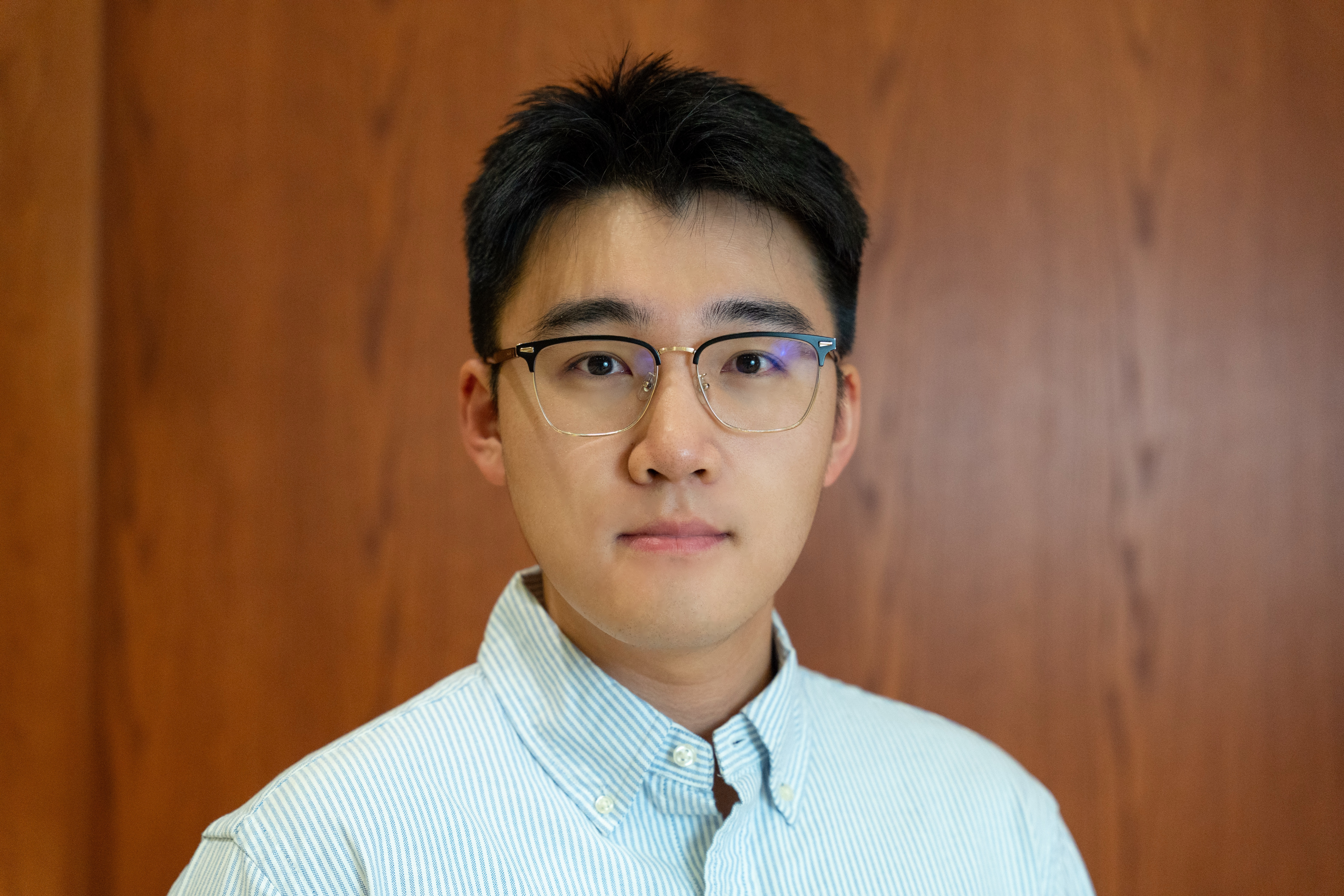
Hello! I am Xingjian (pronounced “Shing-jee-en”) Ma, a third-year Ph.D. candidate in the Human Factors and Machine Learning (HFML) Lab in the Department of Industrial and Systems Engineering at the University of Wisconsin–Madison.
My research focuses on computational modeling of human behavior as a core component of human–automation interaction systems. Specifically, I integrate human factors engineering, machine learning, and probabilistic cognitive modeling, particularly POMDP-based Active Inference, to study human behavior and decision-making in complex, uncertain environments.
My work goes beyond merely modeling what humans do by also capturing what they believe, what they are uncertain about, and how these internal states shape their actions. This provides a more flexible, interpretable, and computationally implementable framework for connecting observable behavior with latent cognitive factors, with the goal of improving the safety, performance, and human-centered design of automated systems.
Oct. 2026
🎙️ Our work on predicting future gait instability from multimodal physiological and biomechanical data was presented at ASPIRE—The HFES 70th International Annual Meeting.
Oct. 2026
🎉 I was selected as a recipient of the 2026 HFES Student Member with Honors Award.
Sep. 2026
📝 My first author work Modeling Driver Adaptation Patterns During Remote Driving was published in Human Factors.
May 2026
📝 My first author work Identifying Critical Breakpoints and Latency Effects During Remote Backup Driving was published in IEEE Transactions on Human-Machine Systems.
May 2026
📝 Our work Automated Assessment of PPE Compliance with Fast Lightweight Deep Learning Based Computer Vision was published in IISE Transactions on Occupational Ergonomics and Human Factors.
May 2026
🎙️ I attended the 2026 NSF M3X PI Meeting, representing our team and presenting our research on Active Inference.
Apr. 2026
🎙️ Undergraduate students I mentored presented our work on latency mitigation effects in remote driving at the UW–Madison Undergraduate Research Symposium.
Jan. 2026
🎉 I passed my Ph.D. preliminary examination.
Jan. 2026
🎙️ I attended the 2026 TRB Annual Meeting and presented our work on human adaptation patterns in remote driving under latency.
Oct. 2025
🎙️ Our work on trust modeling in automated driving with physiological data was presented at ASPIRE—The HFES 69th International Annual Meeting.
Apr. 2025
🎙️ I attended the 2025 Safe Mobility Conference and presented our work on latency effects on human in remote driving.
Mar. 2025
📝 Our work What leads to reliance on automated vehicles? An inferential analysis of responses to variable AV performance was published in Applied Ergonomics.
Oct. 2024
🎉 I passed my Ph.D. qualifying examination.
Sep. 2024
🎙️ I attended ASPIRE—The HFES 68th International Annual Meeting and presented our works on discrete event simulation of remote operator workload and reliance decision modeling in automated vehicles
Jan. 2024
🎙️ Our work on statistical pattern–based analysis of visual scanning behavior in driving was presented at the 2024 TRB Annual Meeting.
Aug. 2023
🏫 I joined the University of Wisconsin–Madison as a Ph.D. student in Industrial and Systems Engineering (Human Factors track).